Parker House Rolls
A well-known roll written as a repeatable home formula, with shaping, second rise, and oven timing made legible to a reader outside the original kitchen.
Read recipeIn 1896, Fannie Merritt Farmer published a cookbook that did something no American cookbook had done before: it insisted that every measurement be level, every method be sequenced, and every recipe be written clearly enough for a stranger to follow. The book she paid to publish herself became the foundation of how Americans write and read recipes today.
We take it for granted that a recipe should work in someone else’s kitchen. In 1896, that idea was still new.
Most cookbooks before 1896 assumed you already knew your way around a kitchen. Recipes called for "butter the size of a walnut" or "a teacup of flour" and trusted that experience would fill in the rest. If you had learned to cook from your mother or in someone else’s household, the shorthand worked. If you hadn’t, the recipe was a riddle.
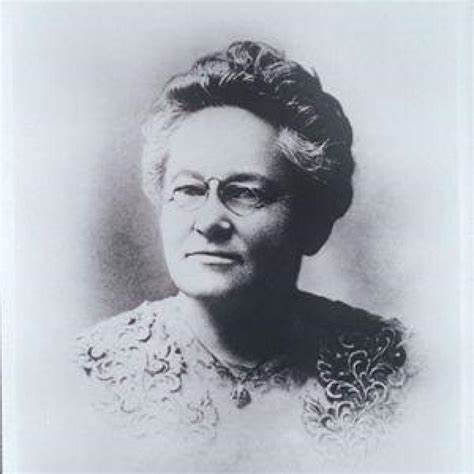
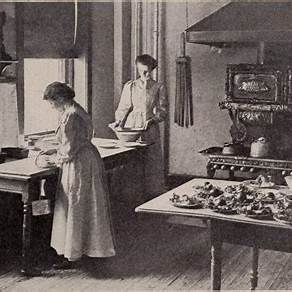
Farmer came to cooking late. A stroke at sixteen left her partially paralyzed, and she didn’t enroll at the Boston Cooking-School until her early thirties. She trained there, then taught there, and eventually ran the school. That teaching background shaped everything about the book. She wrote for students — people who did not yet have the instinct the older cookbooks assumed.
She made level cups, tablespoons, and teaspoons the law of the book. The rule appears near the front and governs every recipe that follows. A woman in Kansas could follow the same instructions as a student in Boston and expect the same result. That had not been reliably true before.
A cupful is measured level. A tablespoonful is measured level. A teaspoonful is measured level.
Open the book to almost any chapter and you can see the system at work. Farmer doesn’t just give you White Sauce I. — she teaches it as a foundation, then calls it back in dozens of later recipes. The book expects you to build a working vocabulary: base sauces, core doughs, methods you’ll reuse.
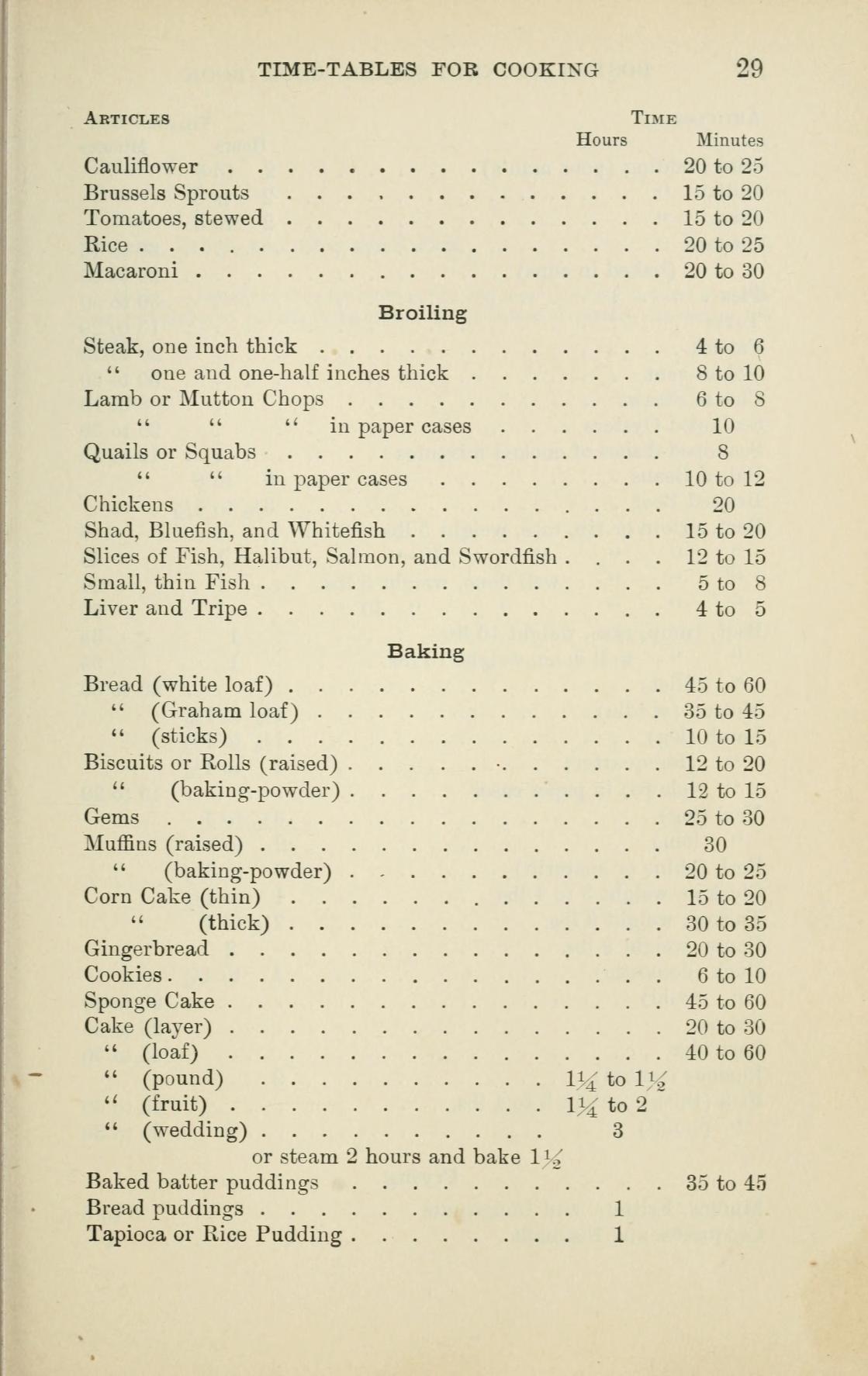
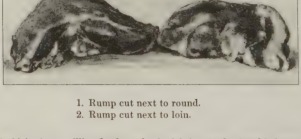
Meat-cut diagrams, timing tables, service instructions, and composed dinner menus sit alongside the recipes, not in a separate appendix. Farmer treated kitchen management and cooking as one discipline, not two. The book is designed to be worked through and returned to, not browsed once and shelved.
That structure made the standardization real. The level measurements matter, but so does the fact that the book is organized so a reader can move from a reference page to a recipe to a dinner menu and feel the logic hold together.
Every recipe you read today — in a cookbook, on a blog, on the back of a box — inherits assumptions that Farmer helped establish: level measurements, structured method, ingredients separated from instructions. We don’t think about it because it feels obvious. It wasn’t, until she made it so.
The first edition also matters because later editions gradually replaced it. The Boston Cooking-School Cook Book stayed in print for decades, but each revision changed recipes, added new ones, and shifted the book’s character. The 1896 original has its own pacing, categories, and assumptions — and those are worth preserving on their own terms.
That’s what the live collection is for. You can move from Parker House Rolls to French Omelet to White Sauce I., then out to menus and reference sections, and see that standardization wasn’t a slogan. It was built into the way the whole book teaches.
Each of these recipes shows a different part of how the book works — bread shaping, egg technique, a reusable base sauce, and measured cake baking.
A well-known roll written as a repeatable home formula, with shaping, second rise, and oven timing made legible to a reader outside the original kitchen.
Read recipeTechnique-driven and concise, this recipe shows how Farmer used sequence and measurement to steady even a preparation that still depends on judgment.
Read recipeA foundational preparation that reveals the book’s logic: teach a dependable base once, then let it travel across many dishes.
Read recipePrecise enough to bake from today — and a good example of how Farmer wrote cake recipes for reliability, not showmanship.
Read recipeThe live collection keeps recipes, menus, reference chapters, and source-page links together — so you can browse the 1896 first edition in sequence or jump to any recipe without losing the book around it.